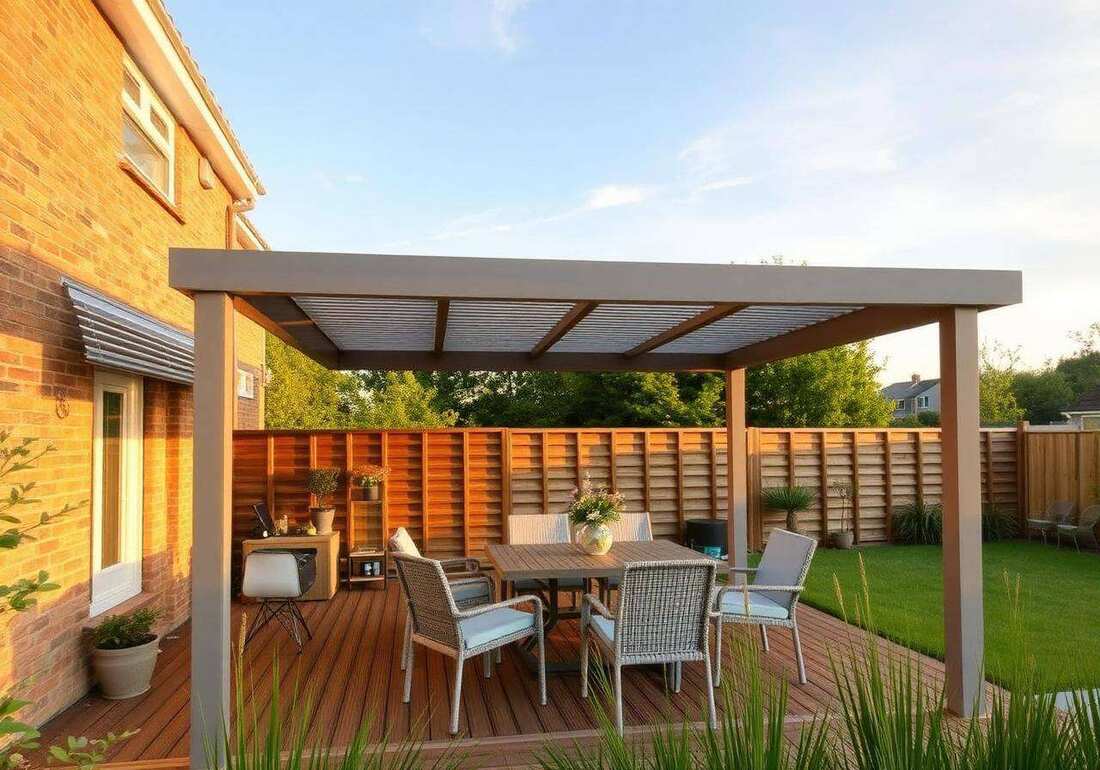
When shown all the options, picking out a parasol may seem like one of the simplest tasks, but there are two main style options to choose from, and which one fits your patio has less to do with how much you want to spend, and more to do with the layout of your outdoor area.
The Centre-Pole Parasol
When most people think about parasols, this is the one that comes to mind. There is a pole that goes through the middle of the canopy and is slotted through the middle hole of a garden table. This is the style that most people sell and therefore the most popular choice.
The main benefit of having this style is the stability. Because the whole parasol is supported by a pole that runs through the middle, and with a decent base, the whole unit is stable. There are other designs that sell for a similar price, and do not offer the same level of stability that a Centre-Pole Parasol has. If you have a dining table on an exposed patio, and a parasol that is unstable, the parasol will be used less no matter how good it looks in the brochure.
The main drawback of this style is the pole runs through the middle of the table. In a large group setting, the pole will be a large distraction and will require constant negotiation to work around. This style also does not work with furniture that does not have a parasol hole, such as a rattan corner sofa, a bench seating arrangement, or a fire pit table.
Centre-pole parasols begin at roughly £40 for a basic 2 metre model and advance to £200 – £300 for a quality 3 metre model with tilt and a robust aluminium pole.
The Cantilever Parasol
A cantilever parasol, or a ‘banana parasol’ due to the arm’s design, has its support structure offset, with a weighted base and an arm to extend the canopy out over the seating area. There is no pole through the middle.
With a cantilever parasol, all of the furniture is shaded without anything in the way. Most designs allow for 360 degree rotation to adjust the shade as the sun moves throughout the day.
This design also addresses the centre-pole’s key issue of stability and cost. Cantilever parasols need very heavy bases as they are weighted to one side – often 40–80kg when filled with sand or water, or a similar weight in a solid concrete or granite base. A cantilever parasol with a poor base is a disappointing product in the category as the parasol is generally good, but the base for it is inadequate for use.
Basic 3-metre cantilever parasols retail for about £150-£250, while premium models with sturdy bases, larger canopies, and a crank-and-tilt mechanism retail for about £500-£800.
Wind Resistance
Wind resistance is an important independent factor to weigh when considering cost, as it has the greatest effect on how often either parasol can be used.
Centre-pole parasols are more wind resistant since the load directly descends through the centre of the base. With a strong enough base, which is often filled with 15-25kg of sand or water (and possibly more, depending on the size of the canopy), a quality centre-pole parasol can be stable in even moderate winds.
By design, cantilever parasols are more sensitive to wind. This is the one area where the biggest letdowns are due to poor purchases. If you are trying a cantilever parasol, do not assume that the stated base weight reflects the total base weight. Usually, additional heavier bases, which are often sold as a set, are worth buying. The best manufacturers in the field will publish a minimum base weight, and it should be viewed as an absolute minimum.
Regardless of base weight, both parasol types should be closed or taken down in strong winds. There are no parasol designs that can withstand an open UK autumn gale.
Canopy Material
There are typically two options for patio parasol canopies: polyester and acrylic. Polyester is going to be the cheaper option, and it is totally fine to use if you expect to use the parasol less frequently. Beware that over time, the UK weather can ruin the polyester with fading and discoloration, not to mention the potential for staining.
Acrylic canopies are used in high quality awnings and retain color and resist staining from mildew much better than polyester. While they do come with a higher price, they are worth it in the long run. If you are spending to get a high quality parasol, check to see if the canopy is acrylic and don’t just assume.
Which to Choose
If you have a parasol hole in your patio dining set and you want to remain on the budget-friendly side, a center pole parasol is a great option.
However, if you want to be able to move the parasol without moving the furniture, or if you have a furniture set with no parasol hole, a cantilever is going to be a much better option, and be realistic in how much you expect it to cost based on how much you need to weigh it down.