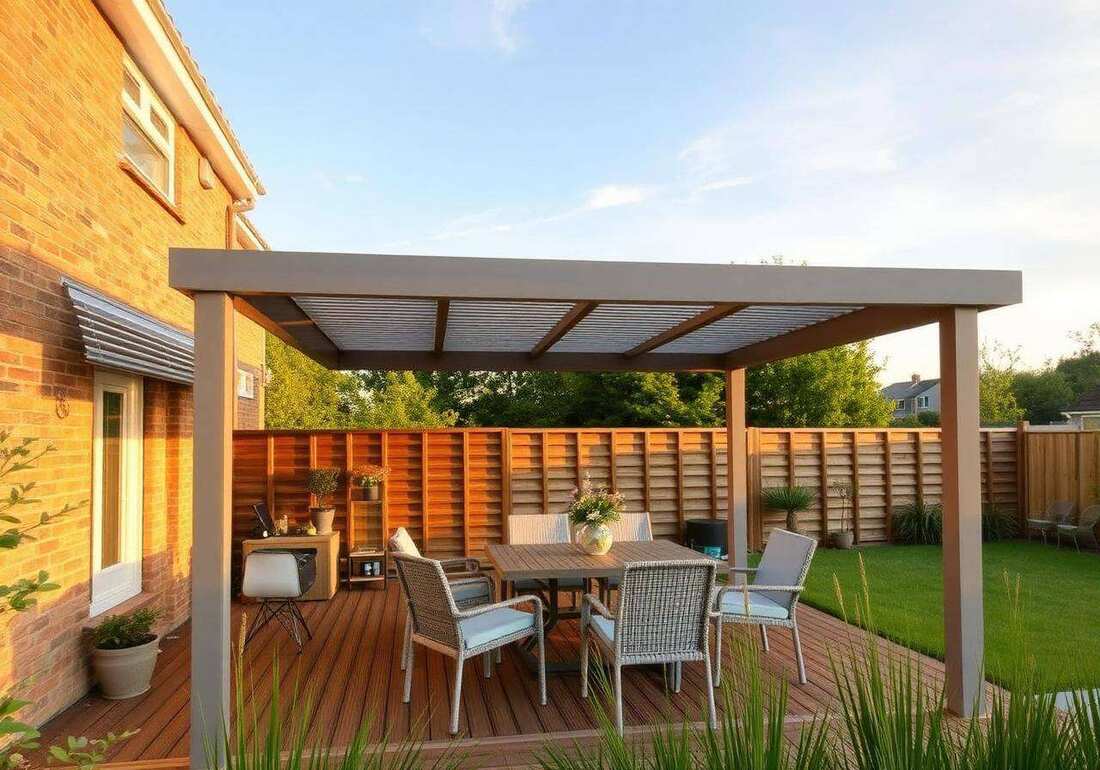
Homeowners need to think about shade in the middle of a long day with the garden. Where would you go to eat outside without the sun? Where would you go to get off of the patio without the British outdoors?
An awning is one of the best things you can add to your garden. First things first, what is the first choice you need to make? It is also one of the most important decisions you need to make so far. What is the choice? Retractable awning or a fixed awning. The difference is gigantic so the correct choice is necessary and is also directly based off of the way that you think of your garden.
A World of Flexibility
A retractable awning has 4 stilted posts and is placed on a wall with 2 of 4 of the posts extending out in a 4 post fashion, either with cranks or motors, extending out, then extending back. This contraption looks pretty neat and folds back right against the wall. When an awning is needed, the retractable awning can extend. It can extend out a distance of 2 to 4 meters.
With a motorized retractable awning, on most UK patios, an awning is the choice and the right choice is flexibility. You get the sun, the shade, the weather, and the flexibility to change on a garden.
One example that’s worth your consideration prior to purchase is retractable awnings and their relationship with wind. Common retractable awning models protect contents from light to moderate winds, if any at all, and UK weather on exposed sight conditions goes beyond that, particularly from autumn and through spring. Motorized models that have built-in wind sensors use retracting mechanisms to close the awning as the wind or weather conditions escalate. This is genuinely useful and prevents the most common cause of awning damage. If you are investing in such models, buying one of the mentioned motorized units is worth it.
When Fixed Cover Makes More Sense
A fixed awning, or more typically, a polycarbonate or insulated roof on a rigid frame, as the name suggests, is permanently fixed to a wall or roof and therefore has no extension or retraction systems and more importantly, is not manually involved in winter weather changes that may occur.
A fixed cover may be a good option when weather independence is desired. No more checking the weather prior to a gathering. No more concerns about where you can set your table or if you’re going to have to bring it inside pegged along the walls, especially in the UK.
There is a tradeoff to a more permanent solution; a fixed cover will be a permanent feature in your space and will constrain where the sun may be. It is worth spending time in the space and observing the light at different times of the day before making a permanent decision.
Fixed structures can be costly. To give you an idea of pricing for polycarbonate roof structures, an average patio covering will set you back between £1,500–£4,000. Solid insulated roofs, which really feel like you have an extra room outdoors, starts off at £4,000 and will go up from there, depending on the size and the desired finish. Your middle option, and what has seen the most growth in popularity in the UK, is a louvered aluminum pergola, as they provide you with an adjustable cover as opposed to a fixed one.
Some Thoughts on Getting Planning Permission
No type of awning, for a straightforward home installation, will need you to obtain panning permission. If the awning is connected to your home, it does not go out further than 3 meters, and it does not cover more than 50% of your garden, it is most probably considered permitted development. However, if you have a listed home, or live in a conservation area, make sure to check if this is the case for your home.
Whether a large pergola which is situated close to the boundary will require you to obtain planning permission is a bit more complicated. The easiest way to confirm is to check your local authority’s planning requirements.
Where to Go from Here
If you have a patio or decking area, your practical starting option is likely to be an awning, as they provide a good starting point. They provide shade, they won’t permanently alter your garden, and they are fairly inexpensive for a quality product.
Fixed covers are better when your outdoor room is planned to be more permanent, when you value being able to control the weather, or when you live somewhere where retractables aren’t practical. An outdoor space can have both types of cover systems. For example, there can be fixed cover over the outdoor room main seating, and a retractable awning beyond the shaded area.