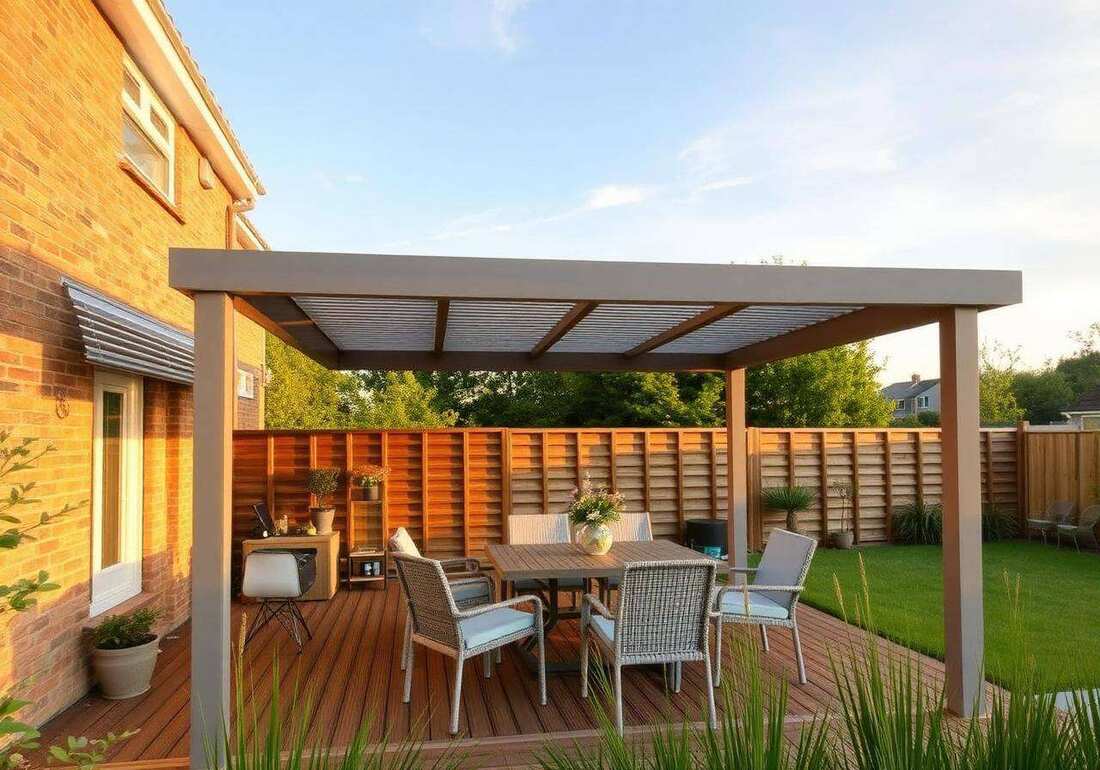
Revealing a small garden can dictate a certain amount of frustration. Small gardens can also seem disproportionate, cluttered, and can easily appear not to come together with what was originally envisioned. Perhaps a positive note to these small space challenges is that potential small space complications can be resolved by doing considerably less rather than more.
Small projects like these suggestions can be very impactful, and some can be completed by themselves without purchasing the complete and necessary landscaping materials.
Simplify the Ground Surface
The ground surface of a small garden can mix; some small gardens may have patches of paving, lawn, sections of gravel, and other incomplete elements. Especially with a small design, these types of surfaces visually create a garden that is unfocused and overwhelmingly small.
A garden can achieve surprising improvement by fussing considerably fewer materials, committing and switching to one main surface element, or at least minimising the number of transitions. Meanwhile, large porcelain paving or decking in the main area of the garden reads as a large cohesive and continuous surface. Uncomplicated level changes and neat edging will clearly and effectively define the separate areas of your garden.
And a small lawn will also require a lot of upkeep in order to maintain its appearance, and when mowing is neglected and the lawn becomes patchy, faded, and worn, the entire space appears uninviting. Using gravel stones or paved surfaces would be a better and more appealing year-round surface placement.
Go Vertical
The vertical growing space in a garden is usually the most neglected growing space. Your garden’s walls and fences, regardless of the smallness of your plot, would still be the same height, and therefore, would be useful surfaces.
Vertical growing is a good way of introducing planting into your small space garden, and that would be wall-mounted planters, climbing plants, and wall planters. Plants that are tall and narrow, would be a good choice for garden space and the slim fastigiate yews, pleached hornbeam, columnar fruit trees would be a good choice. These could give you height and structure without the large spread of a large garden tree or large shrub. They could also give you a garden screen without a fence. In a small garden, an enclosure fence or screen could make the space feel very oppressive rather than private.
Sort Out Your Edging
Organising the edging of your garden space may not be the most captivating task, but good edging contributes greatly to the look of your garden and helps with the upkeep of the garden. Loose materials like gravel bark and pea shingle may require a lot of maintenance as they end up in the gardens and borders that surround the garden space.
Landscape edging is required to install both long lasting timbers and metals. Steel edging rails will be generally more expensive but will last longer without requiring maintenance. Sawn timber boards may be a cheap alternative, but may need replacing more regularly. Whatever edging choices a gardener may make, defined edges around pathways and planting beds will simplify the maintenance of a garden and promote a tidy look.
Rethinking Paths
Straight pathways in small gardens actually shorten spaces. A path that is slightly off course creates a garden space that feels longer and more considered. Paths don’t need to be overly curved.
Path width is something that is also important and is often overlooked. A path with a width of less than 600mm feels very small and tentative but a width of about 900mm is perceived as more formal. 900mm paths also allow for two people to walk side by side which encourages more movement through the garden overall.
Using stepping stones with the addition of low planting and gravel creates a more flexible and budget friendly path option. The most important aspect to consider is the spacing of the stepping stones. Before committing to planting, measure out the distance of a natural grown step. Space the stepping stones at this distance.
Optimising Nightly Spaces
A small garden with good evening lighting can feel more spacious and inviting than an unlit garden that is twice its size. This is the type of improvement that optimises space usage year-round, especially in the evening.
Solar lighting with improved technology can produce meaningful outputs for some garden situations. If you want lighting that works, low voltage wired systems need to be a serious consideration for a better return on investment. Post lighting, step lights, and festoons for a pergola can be unobtrusive options to transform a small garden.